
4 Gas Monitor Cheat Sheet & Reference Tags for Firefighters
Quick reference for interpreting 4 gas monitor readings (CO, H2S, O2 & LEL) — built for firefighters and confined space work. This is why many crews rely on a 4 gas monitor cheat sheet instead of memory alone.
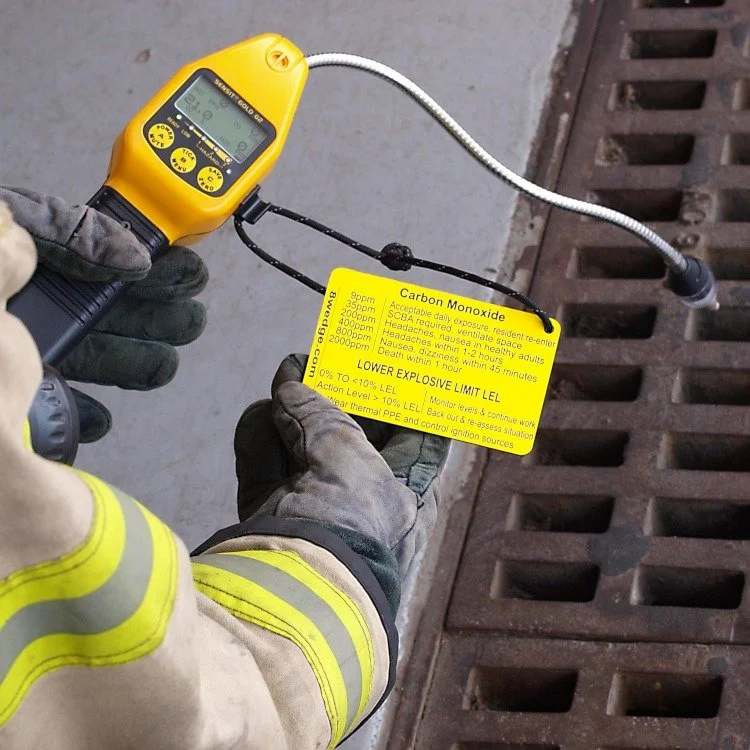
4 gas monitor reference tag used to quickly interpret CO, H2S, O2, and LEL readings in real-world conditions
When the Meter Alarms, There’s No Time to Guess
At 3AM on a call, you’re not flipping through a hazmat manual.
Gas monitors give you numbers — but those numbers only matter if you know what they mean.
Is that H2S reading dangerous?
Is that LEL percentage explosive?
Is CO at that level immediately hazardous?
These tags exist so you don’t have to remember — you can act immediately with confidence.
What Is a 4 Gas Monitor Cheat Sheet?
A 4 gas monitor cheat sheet is a quick reference guide for interpreting readings from standard gas detectors measuring:
Oxygen (O₂)
Carbon Monoxide (CO)
Hydrogen Sulfide (H₂S)
Lower Explosive Limit (LEL)
Our tags take that information and put it directly on your gear or meter — so it’s always within reach when you need it. It’s commonly used as a gas detector reference chart for quick decision-making in the field.
Turn Your Cheat Sheet Into a Field Tool
Instead of relying on memory, these reference tags attach directly to your gas monitor or bunker gear.
Fast lookup during active calls
No phone or paperwork needed
Designed for real-world use
4 Gas Monitor Reference Tag
Our most popular option — designed for standard 4-gas monitors used in fire service and industrial safety.
Key exposure levels at a glance
LEL guidance for explosive risk
Clear, readable layout under pressure
If you carry a 4-gas meter, this is the fastest way to interpret readings under pressure.
Not All Departments Run 4-Gas Monitors
Many departments use single-gas meters depending on their equipment and response needs. These tags act as single-gas reference charts for departments running dedicated monitors.
That’s why we also offer dedicated reference tags for:
Each tag includes:
Front: reading levels and thresholds
Back: symptoms, hazards, or likely sources
Designed for quick interpretation when it matters most.
Gas Monitor Reference Tags
Browse our full line of gas monitor reference tags, including 4-gas and single-gas options.

A durable 4-gas meter reference tag built for quick field checks of CO, H2S, O2 and LEL readings.
This high-visibility tag clips to gas monitors, PPE, gear bags or keyrings so firefighters, safety crews and industrial users can keep critical gas reading information close at hand.
Made from weather-resistant 3-ply laminate and laser etched for long-term visibility, the Multi-Gas Tag provides a fast reference point during training, active calls, confined-space work, hazmat response and daily gas monitor use.
Clip it to your meter, gear or PPE for quick access when it matters most.

Ammonia (NH₃) is a highly irritating gas commonly encountered in industrial, agricultural, and refrigeration environments. While it can often be detected early, exposure levels can escalate quickly and impact breathing, visibility, and crew effectiveness.
This ammonia reference tag gives you a fast, reliable way to interpret NH₃ ppm readings in the field without relying on memory.
Designed as a durable, field-ready cheat sheet, it attaches directly to your gas monitor or bunker gear so exposure levels, symptoms, and response guidance are always within reach.
Quick reference for ammonia (NH₃) ppm readings and exposure thresholds
Clear progression from irritation to dangerous exposure levels
Symptoms and response guidance for rapid decision-making
No phone or manual needed during response
If you’re monitoring ammonia, this is the fastest way to understand readings under pressure.
Need help understanding gas readings? View our 4 Gas Monitor Cheat Sheet
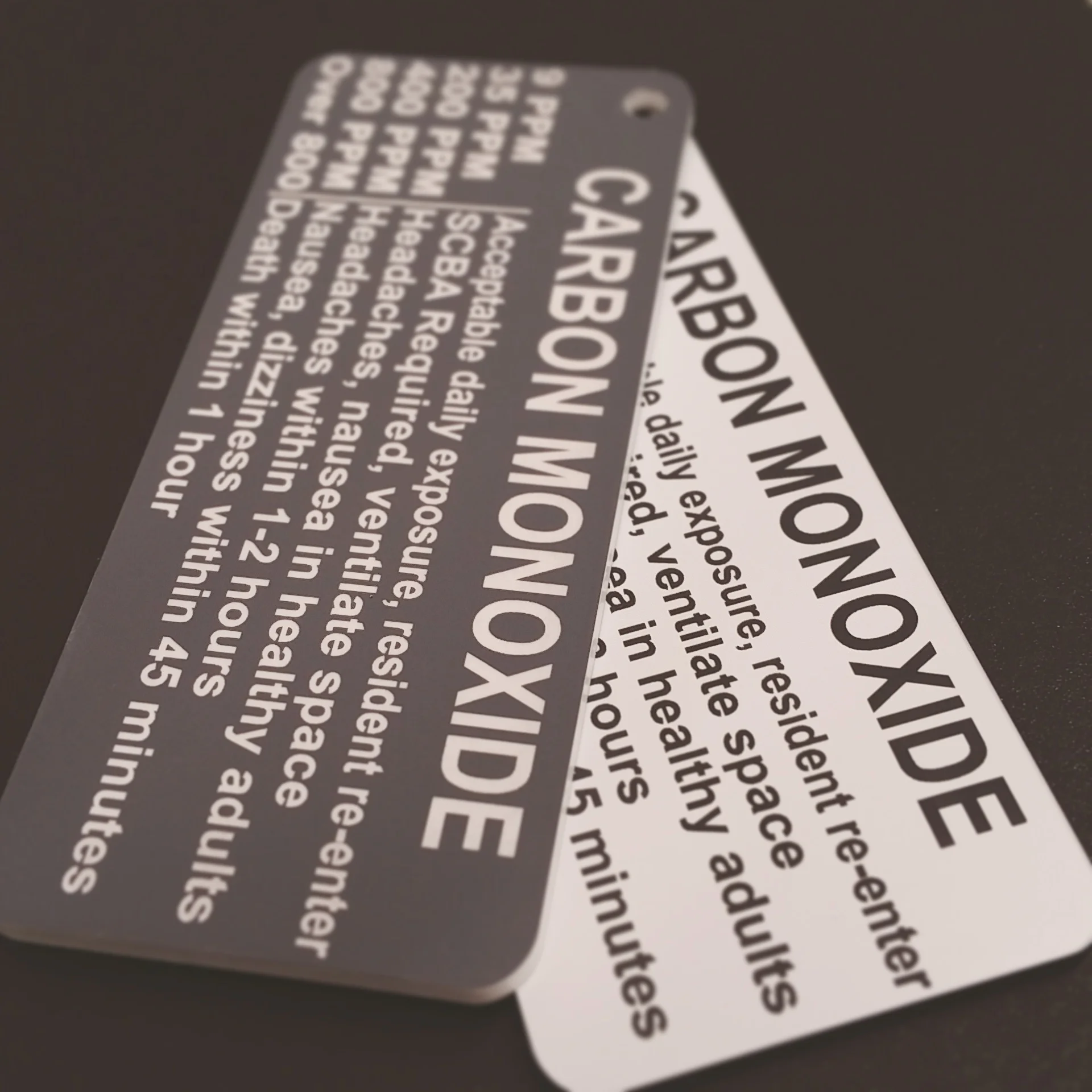
Carbon monoxide (CO) is one of the most common — and most deceptive — hazards encountered on calls. Dangerous levels aren’t always obvious, and symptoms can escalate quickly.
This carbon monoxide reference tag gives you a fast, reliable way to interpret CO ppm readings in the field without relying on memory.
Designed as a durable, field-ready cheat sheet, it attaches directly to your gas monitor or bunker gear so exposure levels, symptoms, and likely sources are always within reach.
Quick reference for CO ppm readings and exposure thresholds
Clear progression from low-level exposure to dangerous conditions
Symptoms and investigation guidance on the reverse side
No phone or manual needed during response
If you’re monitoring carbon monoxide, this is the fastest way to understand readings under pressure.
Need help understanding gas readings? View our 4 Gas Monitor Cheat Sheet
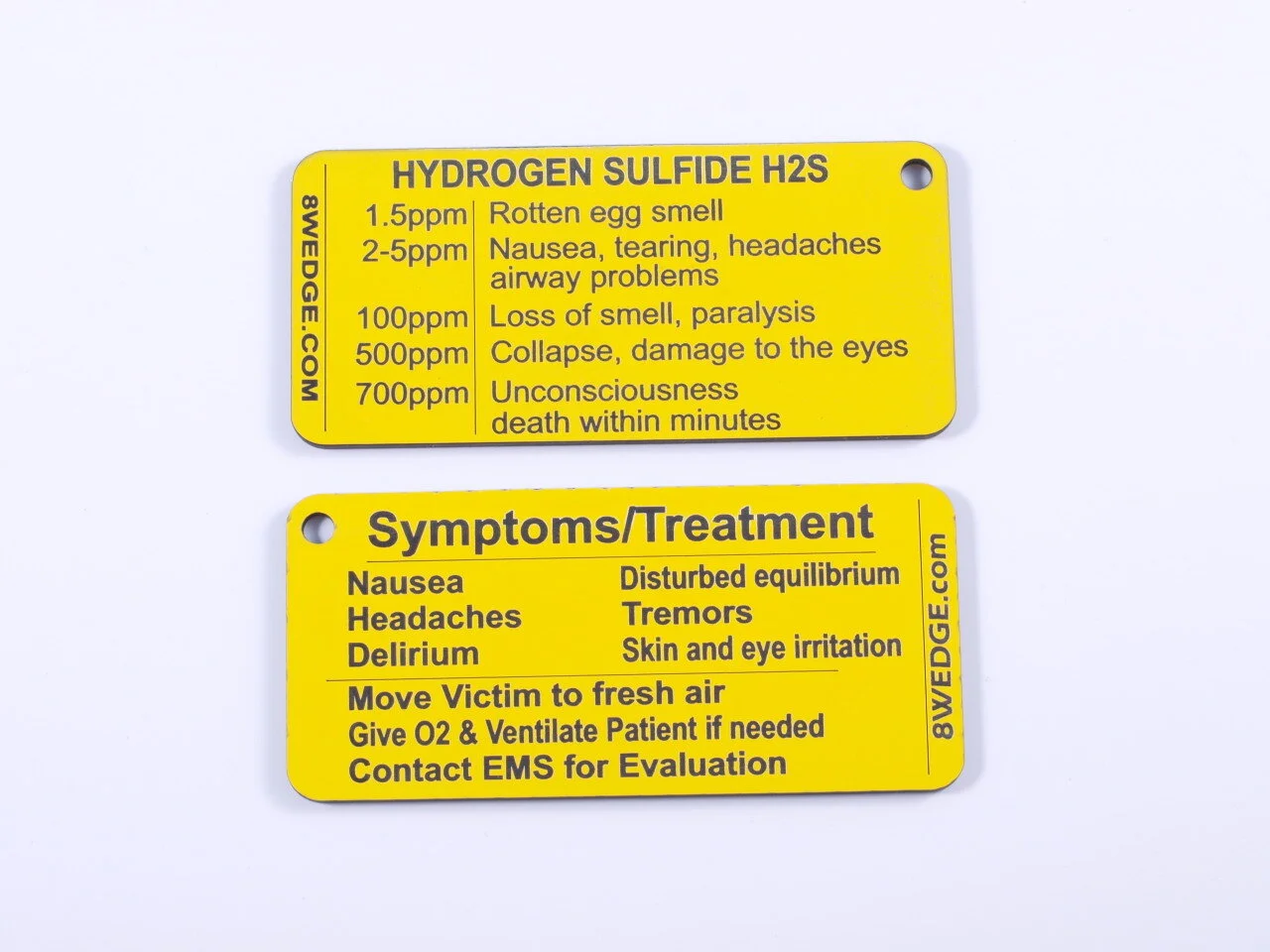
Hydrogen sulfide (H₂S) is one of the most dangerous gases encountered in fire service and confined space work — and small changes in ppm can mean a major change in risk.
This hydrogen sulfide reference tag gives you a quick, reliable way to interpret H₂S readings in the field without relying on memory.
Designed as a durable, field-ready cheat sheet, it attaches directly to your gas monitor or bunker gear so critical exposure levels, symptoms, and hazards are always within reach.
Quick reference for H₂S ppm readings and exposure thresholds
Clear guidance for increasing danger levels
Symptoms and treatment info on the reverse side
No phone or manual needed in the field
If you’re carrying an H₂S meter, this is the fastest way to understand readings under pressure.
Need help understanding gas readings? View our 4 Gas Monitor Cheat Sheet

Chlorine (Cl₂) is a highly irritating and potentially life-threatening gas commonly encountered in industrial settings, water treatment, and chemical incidents. Even moderate exposure can quickly impact breathing and lung function.
This chlorine reference tag gives you a fast, reliable way to interpret Cl₂ ppm readings in the field without relying on memory.
Designed as a durable, field-ready cheat sheet, it attaches directly to your gas monitor or bunker gear so exposure levels, symptoms, and response guidance are always within reach.
Quick reference for chlorine (Cl₂) ppm readings and exposure thresholds
Clear progression from irritation to life-threatening conditions
Symptoms and response guidance for rapid decision-making
No phone or manual needed during response
If you’re monitoring chlorine, this is the fastest way to understand readings under pressure.
Need help understanding gas readings? View our 4 Gas Monitor Cheat Sheet
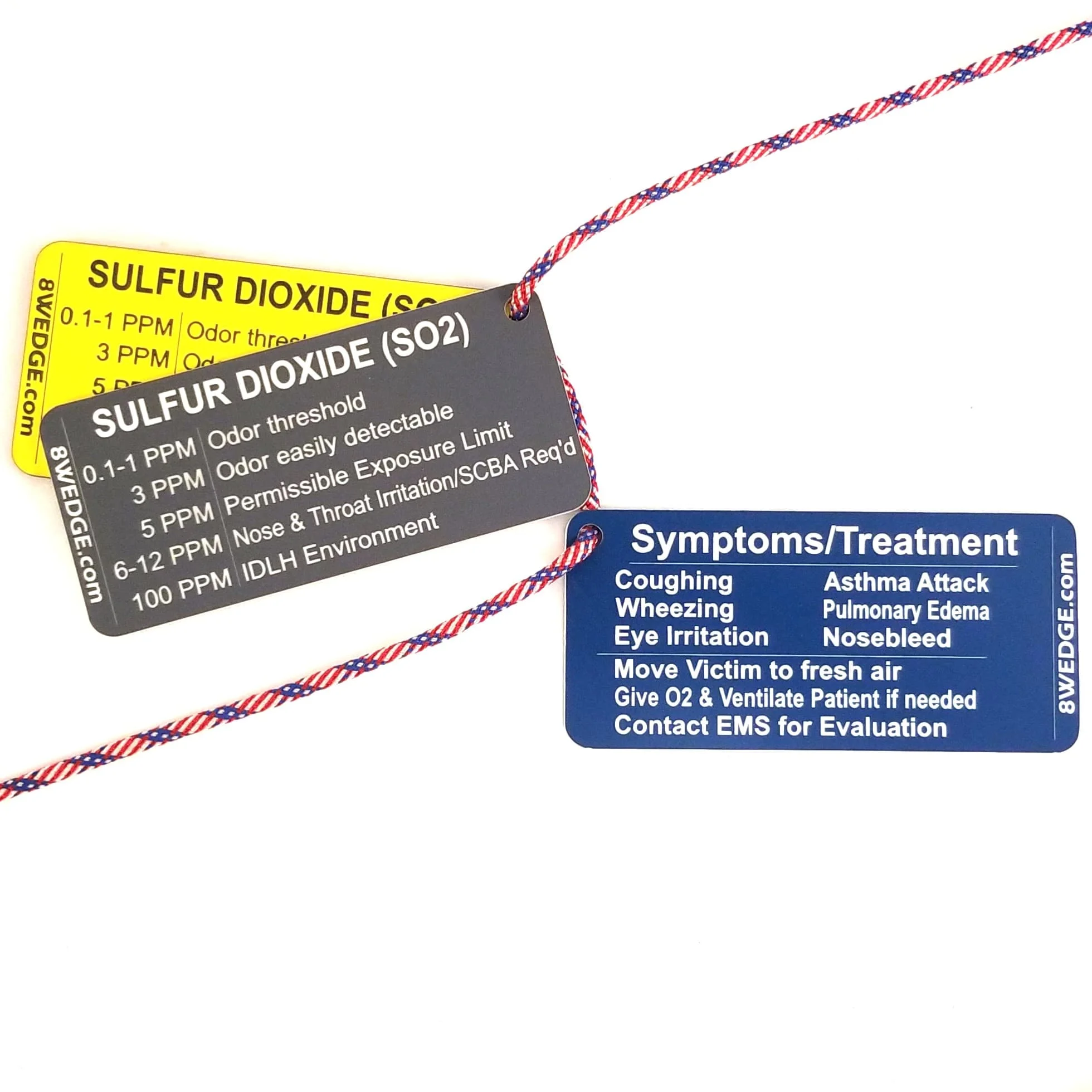
Sulfur dioxide (SO₂) is a highly irritating gas that can quickly impact breathing, visibility, and crew effectiveness — even at relatively low concentrations.
This sulfur dioxide reference tag gives you a fast, reliable way to interpret SO₂ ppm readings in the field without relying on memory.
Designed as a durable, field-ready cheat sheet, it attaches directly to your gas monitor or bunker gear so exposure levels, symptoms, and response guidance are always within reach.
Quick reference for SO₂ ppm readings and exposure thresholds
Clear progression from irritation to dangerous exposure levels
Symptoms and treatment guidance on the reverse side
No phone or manual needed during response
If you’re monitoring sulfur dioxide, this is the fastest way to understand readings under pressure.
Need help understanding gas readings? View our 4 Gas Monitor Cheat Sheet

Natural gas readings aren’t about toxicity — they’re about explosion risk.
When your meter shows a % of LEL, you need to know immediately how close you are to a dangerous atmosphere.
This natural gas (NG) reference tag gives you a clear, fast way to interpret LEL readings in the field without guessing.
Designed as a durable, field-ready cheat sheet, it attaches directly to your gas monitor or bunker gear so explosive range thresholds and response guidance are always within reach.
Quick reference for % LEL readings and explosive range
Clear escalation from safe to dangerous levels
No phone or manual needed during response
Built for fire service, gas response, and confined space work
If you’re monitoring natural gas or LEL, this is the fastest way to understand readings under pressure.
Need help understanding gas readings? View our 4 Gas Monitor Cheat Sheet

Oxygen (O₂) levels are critical to life safety — and small changes outside the normal range can quickly lead to impaired judgment, unconsciousness, or increased fire risk.
This oxygen reference tag gives you a fast, reliable way to interpret O₂ percentage readings in the field without relying on memory.
Designed as a durable, field-ready cheat sheet, it attaches directly to your gas monitor or bunker gear so safe ranges, deficiency risks, and oxygen-enriched hazards are always within reach.
Quick reference for oxygen (O₂) percentage ranges
Clear guidance for oxygen deficiency and enrichment hazards
Immediate context for impaired judgment and life-threatening conditions
No phone or manual needed during response
If you’re using a gas monitor, this is the fastest way to understand oxygen readings under pressure.
Need help understanding gas readings? View our 4 Gas Monitor Cheat Sheet
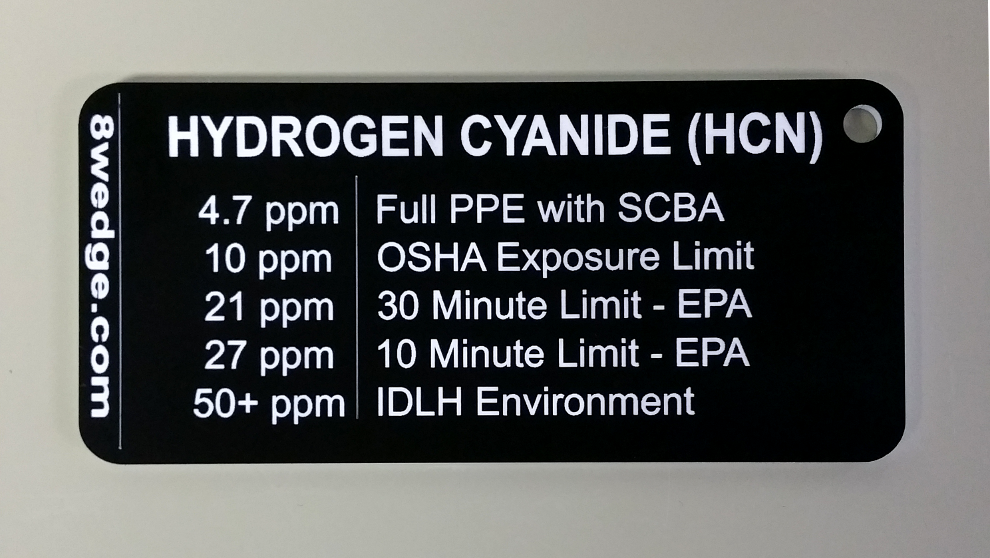
Hydrogen cyanide (HCN) is one of the most dangerous gases encountered on the fireground — often present in smoke and capable of causing rapid incapacitation at relatively low concentrations.
This hydrogen cyanide reference tag gives you a fast, reliable way to interpret HCN ppm readings in the field without relying on memory.
Designed as a durable, field-ready cheat sheet, it attaches directly to your gas monitor or bunker gear so exposure limits, IDLH thresholds, and response guidance are always within reach.
Quick reference for HCN ppm readings and exposure limits
Clear thresholds for SCBA use, time limits, and IDLH conditions
Immediate context for life-threatening environments
No phone or manual needed during response
If you’re operating on the fireground or monitoring toxic gases, this is the fastest way to understand HCN readings under pressure.
Need help understanding gas readings? View our 4 Gas Monitor Cheat Sheet
Built for Fire Service & Confined Space Work
Used by:
Fire departments
Confined space entry teams
Industrial safety crews
Utility and gas response teams
Commonly used alongside 4 gas monitors during fire response and safety checks.
Built for Real Conditions
Weather-resistant 3-ply laminate
Laser-etched for long-term durability
Compact and easy to attach
Designed for fast readability under pressure
Gas Monitor Reference FAQ
What is a 4 gas monitor?
A standard gas detector that measures O₂, CO, H₂S, and LEL levels.
What does LEL mean?
Lower Explosive Limit — the concentration at which gas becomes combustible.
Why use a reference tag?
Because remembering exposure limits under stress is unreliable. These provide instant guidance.
Do these work with any gas monitor?
Yes — they are universal reference tools and can attach to most meters or gear.
What readings are dangerous on a 4 gas monitor?
Danger levels vary by gas, but reference tags provide quick thresholds so you can act without hesitation.